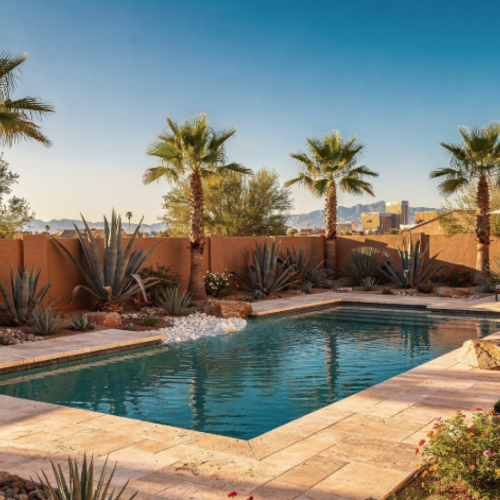



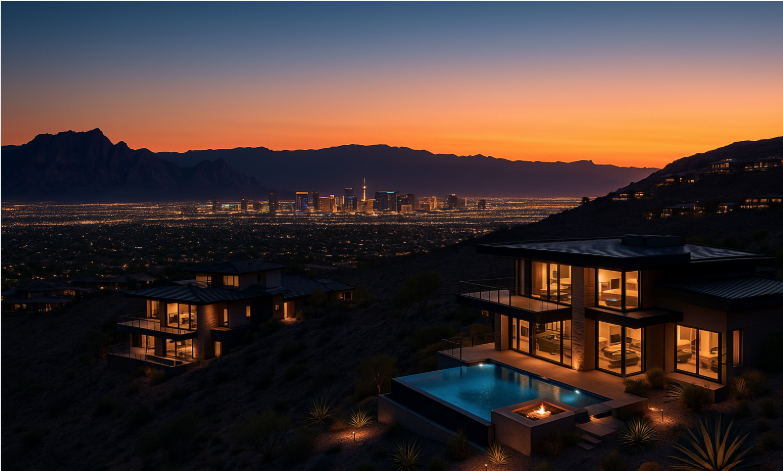
The kitchen is beautiful. The primary bedroom is huge. There's a three-car garage, fresh paint, and just enough space in the backyard.
It feels perfect.
But did you check which direction the backyard faces at 4 p.m.?
Did you listen for traffic with the patio door open?
Do you know how old the air conditioner is?
And what exactly is planned for that giant empty piece of land across the street?
When house hunting in Las Vegas, some of the details that matter most aren't necessarily the ones that grab your attention during a showing.
Here are 10 things Las Vegas home buyers shouldn't overlook.
1. Where the Afternoon Sun Hits
In many cities, which direction a house faces might be a minor detail.
In Las Vegas, it's worth paying attention to.
Walk through the home and notice where direct sunlight enters. Large windows can provide beautiful natural light, but buyers should also think about shade, window coverings, orientation, and how different rooms may feel throughout the day.
The backyard deserves the same attention.
If you picture yourself eating dinner outside or relaxing on the patio, consider how much shade that space gets in the afternoon.
A showing at 10 a.m. doesn't necessarily tell you what the property will feel like several hours later.
2. The Age of the Air-Conditioning System
Fresh paint is easy to notice.
The HVAC equipment isn't nearly as exciting—but it deserves your attention.
Ask about the age, condition, and maintenance history of the home's cooling system when information is available.
If you're purchasing a larger house or a property with multiple systems, understand how the home is cooled and which areas each system serves.
Your home inspection can provide additional information about visible components and identify concerns that may warrant further professional evaluation.
Don't let a gorgeous remodeled kitchen distract you from one of the home's hardest-working systems.
3. What's Going to Be Built Nearby?
That open desert behind the backyard can look incredible.
But will it always be open?
Vacant land shouldn't automatically be treated as permanent open space.
If undeveloped property is an important part of what you like about a home, investigate it before purchasing.
Look into zoning, nearby development proposals, and applicable planning information. Ask questions rather than relying on assumptions.
Future development could potentially affect traffic, views, noise, and the overall surroundings.
You aren't just buying what's inside the property lines.
Location matters too.
4. The HOA Rules You Didn't Think to Ask About
Many Las Vegas-area buyers will encounter homes governed by homeowners associations.
It's easy to focus on the monthly assessment.
The rules can matter just as much.
Before purchasing, review applicable HOA documents carefully.
Depending on the community, rules may address things such as parking, exterior modifications, landscaping, architectural changes, recreational vehicles, rental arrangements, and other property uses.
If you're already imagining painting the exterior, adding something to the backyard, or using the property in a particular way, verify that your plans are permitted.
"I assumed I could" isn't something you want to discover after closing.
5. Your Actual Commute
A listing might say a property is conveniently located.
Convenient for whom?
Before making an offer, map the places you'll visit regularly—not just the Strip.
Consider your workplace, airport, schools when relevant, healthcare, family, shopping, restaurants, recreation, and anything else that forms part of your routine.
If commuting matters, test important routes around the time you would normally travel when practical.
The perfect home can become much less perfect if you dislike getting to and from it every day.
6. Noise You Can't Hear During the Showing
A quiet showing doesn't necessarily mean a quiet home.
Visit the area at different times when possible.
Listen for traffic. Look at nearby major roads. Consider commercial properties, schools, entertainment venues, construction, and other surrounding uses.
Then step into the backyard and listen.
This is particularly important if outdoor living is one of the reasons you like the property.
A beautifully staged patio may photograph perfectly while having a completely different atmosphere during a busy part of the day.
7. The Landscaping You'll Actually Have to Maintain
Desert landscaping can look wonderfully simple.
Gravel. A few desert plants. Maybe some trees and decorative rock.
But "desert landscaping" doesn't mean "no maintenance."
Look at irrigation equipment, mature trees, plant condition, weeds, drainage, walls, and hardscaping.
Consider how much work you're willing to do yourself and what you may prefer to hire someone else to maintain.
Water use matters in Southern Nevada as well. The Southern Nevada Water Authority provides current information about watering restrictions, conservation programs, and water-smart landscaping.
The yard should fit your lifestyle just as well as the kitchen does.
8. What's Outside the Listing Photos
Real estate photography has one job:
Show the property at its best.
That's why buyers should pay attention to what isn't photographed.
Walk around the sides of the house.
Look behind the garage.
Examine neighboring properties.
Notice utility equipment, retaining walls, drainage features, streets, alleys, and what's beyond the backyard wall.
Then look back toward the house.
Listing photos can make a yard feel incredibly private by choosing the right camera angle.
Standing in the middle of it tells you much more.
9. How Much House You're Actually Getting
Two Las Vegas homes listed at similar prices can provide completely different ownership experiences.
One might offer more square footage but have an HOA and a smaller lot.
Another might be older with a larger yard.
One may have a pool.
Another could have an extra garage bay.
One may be farther from work but offer a newer interior.
That's why price per square foot alone doesn't tell you which property is better for you.
Compare the complete package:
- Location
- Lot
- Condition
- Home age
- Major systems
- HOA obligations
- Outdoor space
- Garage and parking
- Layout
- Commute
- Renovations
- Maintenance needs
The biggest house isn't automatically the best value.
10. Whether You Love the House—or the Upgrades
This might be the biggest house-hunting trap of all.
You walk inside and see brand-new flooring, trendy cabinets, beautiful countertops, new fixtures, and perfectly coordinated furniture.
It looks fantastic.
Now mentally remove all of it.
Would you still want the property?
Do you like the location?
The floor plan?
The lot?
The natural light?
The backyard?
The commute?
Cosmetic features can often be changed.
Moving a house to another neighborhood is considerably harder.
When comparing Las Vegas homes, try separating the property itself from the finishes someone selected for it.
The 15-Minute Test Before You Leave a Showing
Before leaving a home you're seriously considering, spend another 15 minutes investigating things that aren't particularly exciting.
Walk outside again.
Check the surroundings.
Look at neighboring properties.
Stand in the backyard.
Listen.
Look at the direction of the sun.
Think about where you'd park.
Consider your commute.
Look at the HVAC equipment.
Then ask yourself:
Would I still want this home if it weren't professionally staged?
If the answer is yes, you may have found something worth investigating further.
FAQs About House Hunting in Las Vegas
What should I look for when buying a home in Las Vegas?
In addition to price, bedrooms, and square footage, consider HVAC condition, sun exposure, roof condition, landscaping, HOA requirements, commute, nearby development, outdoor space, and the overall condition of the property.
How important is air conditioning when buying a Las Vegas home?
Cooling is an important consideration in the Southern Nevada climate. Buyers should understand the age, condition, configuration, and available maintenance history of the home's HVAC equipment and have appropriate systems evaluated during the inspection process.
Should I avoid homes with an HOA in Las Vegas?
Not necessarily. Some buyers appreciate the standards or amenities an HOA community can provide, while others prefer fewer restrictions. Review the fees, rules, financial information, responsibilities, and restrictions before deciding whether a particular HOA works for you.
Should I worry about vacant land near a Las Vegas home?
You shouldn't assume vacant land will remain undeveloped. If nearby open land is important to your purchasing decision, research applicable zoning and available development information before making an offer.
Is house orientation important in Las Vegas?
It can be. Orientation affects direct sunlight, windows, patios, outdoor living spaces, and shade. Buyers should consider how the property experiences sunlight at different times of day.
Should I visit a Las Vegas neighborhood at night before buying?
Visiting at different times can help you better understand traffic, lighting, noise, activity, and the general surroundings. Buyers should evaluate the neighborhood based on their own priorities rather than relying solely on a single daytime showing.
Is desert landscaping maintenance-free?
No. Desert landscaping can reduce certain maintenance requirements compared with some traditional landscapes, but irrigation systems, plants, trees, weeds, drainage, and hardscaping can still require ongoing attention.
Should I buy a new or older home in Las Vegas?
Neither is automatically better. Compare location, condition, total ownership costs, construction, HOA obligations, lot size, major systems, upgrades, and your lifestyle rather than deciding based on age alone.
What should I ask before making an offer on a Las Vegas home?
Ask about known property issues, major system ages, HOA requirements, previous renovations, applicable disclosures, and other property-specific concerns. Use the inspection and due-diligence process to investigate anything important to your decision.
Look Beyond the Listing When Buying in Las Vegas
The most memorable parts of a house are usually the easiest to notice.
The kitchen.
The backyard.
The giant shower.
The mountain view.
But some of the most important details when house hunting in Las Vegas require you to look a little harder.
Check the HVAC. Think about the afternoon sun. Read the HOA documents. Test your commute. Research nearby vacant land. Walk around the entire property.
And don't let beautiful upgrades convince you to compromise on the things you can't easily change.
The goal isn't to find the Las Vegas house that looks best during a 30-minute showing.
It's to find the one you'll still be happy you bought years after the listing photos are gone.
Check out this article next