



Las Vegas Buyers Have More Leverage This Fall—Here’s Why
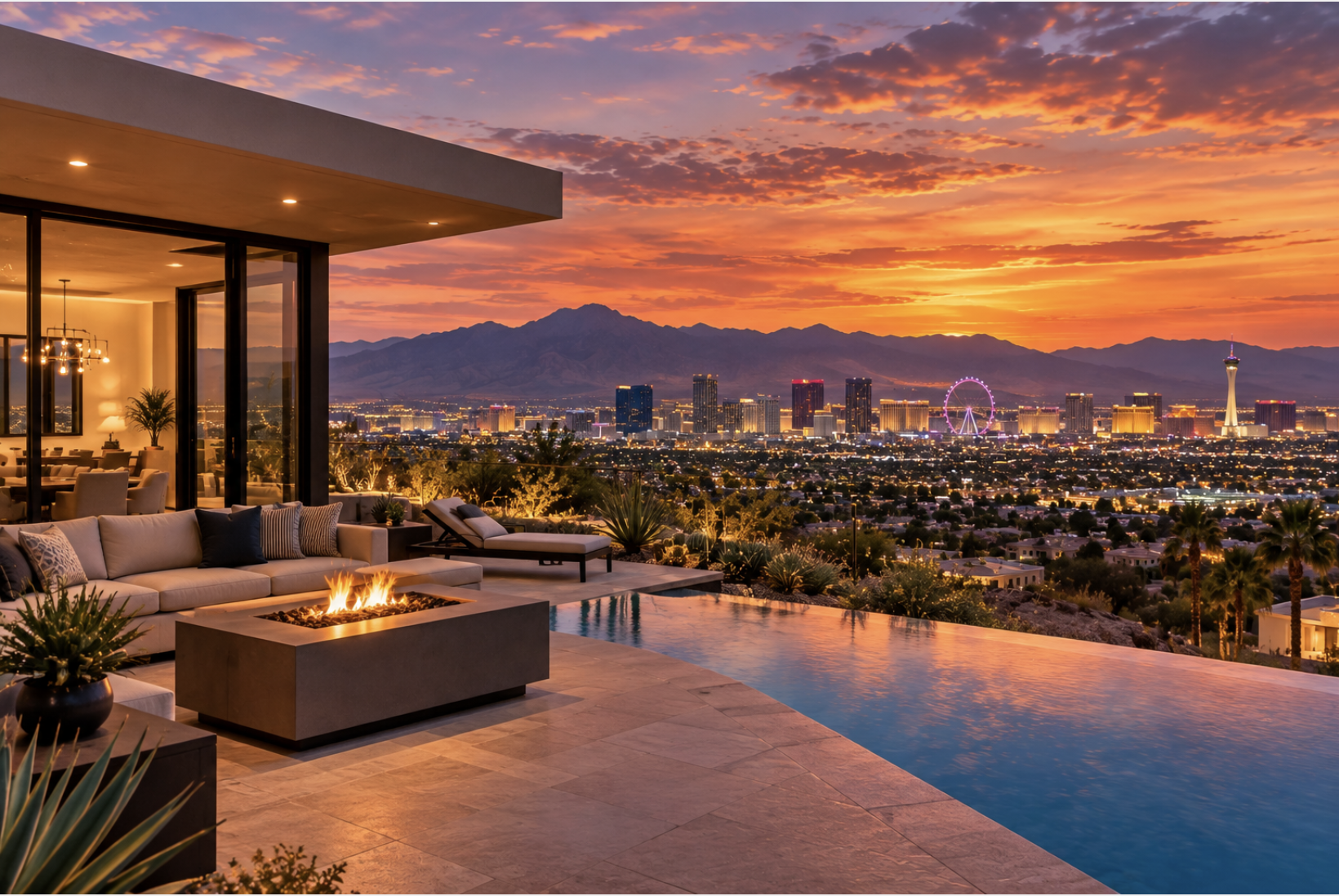
Something Interesting Is Happening in Las Vegas Real Estate
For years, the Las Vegas housing story seemed relatively simple.
Prices went up. Homes could move quickly. Buyers worried about competition. Sellers often held the stronger hand.
This fall, the conversation is becoming much more interesting.
Las Vegas home prices haven't suddenly collapsed. In fact, they remain relatively close to the record levels reached earlier this year.
But buyers are seeing something they haven't always had in recent years:
more choice and potentially more negotiating power.
The latest August numbers from Las Vegas REALTORS show that the median sale price of an existing single-family home in Southern Nevada was $475,000. That's 1% lower than August 2025 and below the record $490,000 median reached in May and June 2026.
Meanwhile, Realtor.com reported 10,788 active Las Vegas listings in August, up 6.9% from a year earlier. Its data also showed a median list price of approximately $469,000 and a median 58 days on market.
That's an unusual combination worth paying attention to:
Prices remain high, but buyers have more homes to choose from.
And that can change how you shop.
What Changed in the Las Vegas Housing Market?
The shift isn't necessarily dramatic when you look only at prices.
A buyer waiting for a huge drop in Las Vegas home values may look at a 1% year-over-year decline and think:
"That's it?"
But price is only one part of a housing market.
You also need to look at inventory, time on market, sales activity, and how sellers respond when their properties don't sell.
That's where the story gets more interesting.
During August, Realtor.com found that Las Vegas active inventory increased 6.9% year over year, compared with a 3.6% increase nationally.
In other words, buyers are seeing a wider selection.
That matters.
When there are very few homes available, buyers can feel pressure to compromise. Maybe you accept the smaller backyard. Maybe you overlook the dated kitchen. Maybe you stretch your budget because you worry there won't be another suitable property.
More inventory changes that psychology.
Suddenly, you can compare.
And comparison creates leverage.
Why More Homes for Sale Can Be Good News for Las Vegas Buyers
Imagine you're shopping for a three-bedroom home.
In one scenario, there are only three properties in your preferred area that meet your criteria.
In another, there are twelve.
Which situation would you rather negotiate in?
The second one doesn't guarantee you'll pay less. A beautiful home that's priced appropriately can still generate plenty of interest.
But having alternatives gives you something important:
the ability to walk away.
That's one of the most powerful tools a buyer has.
If a seller won't agree to terms that make sense for you, another property might.
If one house needs too much work, you can look at another.
If the asking price doesn't match comparable properties, you don't necessarily need to chase it.
More inventory doesn't mean every buyer suddenly controls every negotiation.
It simply means the balance between buyers and sellers can become more even.
And that's a meaningful change.
The $475,000 Number Las Vegas Buyers Should Know
The August 2026 median sale price for existing single-family homes in Southern Nevada was $475,000.
But here's an important point:
The median is not the price of "a Las Vegas house."
It's the midpoint of the homes included in that month's sales.
Your experience could look completely different depending on where and what you're buying.
A condo near the center of the Valley isn't the same market as a luxury home in Summerlin.
A starter home isn't competing with a multimillion-dollar property.
A house in Henderson can attract a different buyer pool from a property in northwest Las Vegas.
That's why buyers should be careful with dramatic headlines about "the Las Vegas housing market."
There isn't just one market.
There are many smaller markets operating simultaneously.
Your price range, property type, ZIP code, condition, lot, upgrades, HOA, and location can all affect how much negotiating power you actually have.
Here's the Number I'd Watch More Closely
Instead of obsessing over whether the median price moved 1% up or down, buyers should pay attention to how long an individual property has been for sale.
That's actionable information.
A house listed yesterday tells you one story.
A house that's been sitting for two months tells you another.
The longer a property remains available, the more questions a buyer should ask.
Was it originally overpriced?
Did a previous contract fall through?
Does it need repairs?
Is the seller simply waiting for the right offer?
Or is there something buyers are repeatedly noticing when they tour it?
You don't know until you investigate.
But those are exactly the listings that can become interesting.
Don't Ignore the Las Vegas Homes Everyone Else Scrolled Past
Real estate websites train buyers to look for one thing:
NEW.
New listing.
Just listed.
Listed three hours ago.
Those properties get attention because buyers haven't seen them before.
But in today's Las Vegas market, I'd also look in the opposite direction.
Look at properties that have been available for a while.
A September 8 analysis of MLS-fed Las Vegas city listings counted 1,817 active properties that were both at least 60 days old and had already received a price reduction. That analysis covered city-limit listings rather than the entire Southern Nevada market, so it shouldn't be directly compared with the broader LVR numbers—but it illustrates where potential negotiating opportunities may exist.
That's interesting.
These aren't necessarily bad homes.
They're homes the market hasn't accepted yet at the combination of price, condition, location, and terms previously offered.
And that distinction matters.
Why 30-, 60-, and 90-Day Listings Can Be Interesting
Put yourself in the seller's shoes.
Day one feels exciting.
The photographs are online. The sign is up. Showings begin.
After a few weeks without an acceptable offer, the conversation can change.
After two months?
The seller may start asking harder questions.
That's why buyers shouldn't automatically assume an older listing is undesirable.
Instead, ask:
Why hasn't this house sold?
Sometimes the answer creates opportunity.
The "Ugly Listing" Strategy
Here's another approach buyers might consider.
Look for houses with terrible listing photos.
Yes, seriously.
A perfectly good home can receive less online attention because the photographs are dark, the rooms are cluttered, the landscaping needs attention, or the listing simply doesn't present the property well.
Most buyers shop visually.
They scroll quickly.
That means an attractive property marketed poorly may receive less attention than a mediocre property with exceptional photography.
Obviously, poor photographs can also be hiding genuine problems.
That's why you still need to inspect the property carefully.
But if you're willing to see what other buyers scroll past, you may uncover options that aren't generating as much excitement online.
Price Reductions Are Becoming Part of the Conversation
Another interesting signal is the prevalence of price cuts.
Realtor.com's August data showed about 24% of Las Vegas listings had a price reduction.
Different datasets and geographic boundaries can produce different percentages, which is why buyers shouldn't treat any single number as universal.
The important takeaway is simpler:
Some sellers are adjusting expectations.
A price reduction doesn't automatically mean the seller is desperate.
Maybe the property started too high.
Maybe nearby competition improved.
Maybe the seller's moving timeline changed.
Or perhaps buyer feedback consistently suggested the asking price wasn't aligned with the home's condition.
Whatever the reason, a reduction gives buyers another piece of information.
And information helps negotiations.
Does This Mean You Should Make a Low Offer on Every House?
No.
This is where buyers can get themselves into trouble.
Having leverage doesn't mean submitting unrealistic offers.
If a desirable home entered the market yesterday at a competitive price, an aggressive low offer may accomplish nothing except losing the property.
Instead, evaluate each house individually.
Consider the asking price, comparable sales, property condition, days on market, previous price changes, competition, and your own maximum budget.
Then structure an offer you can defend.
And remember:
Price isn't the only thing you can negotiate.
Depending on the property, seller, financing, and contract, negotiations may involve closing dates, repairs, seller concessions, personal property, or other terms.
A good negotiation isn't about "beating" the seller.
It's about creating an agreement that works for both sides.
Why Fall Can Be an Especially Interesting Time to Shop in Las Vegas
September is an unusual transition month here.
It's still hot.
But fall is approaching.
That can actually be useful when you're touring homes.
A beautiful Las Vegas house in January might feel perfect.
Touring that same property during September gives you a different perspective.
You can see how the home handles genuine desert heat.
Does the upstairs stay comfortable?
Does one bedroom feel noticeably warmer?
How much afternoon sun hits the windows?
Is the west-facing backyard comfortable?
Is there enough shade around the pool?
How does the air-conditioning system perform?
These aren't small considerations in Las Vegas.
They're everyday quality-of-life issues.
Look Beyond the Kitchen—Check What Keeps the House Comfortable
Buyers understandably get excited about remodeled kitchens, luxury flooring, giant showers, pools, and outdoor kitchens.
But some of the least glamorous parts of a Las Vegas house deserve the most attention.
The HVAC system is an obvious example.
So is the roof.
Windows, insulation, pool equipment, irrigation, plumbing, electrical components, solar arrangements when applicable, and exterior condition can all matter.
A gorgeous home with expensive deferred maintenance may be less attractive financially than a slightly dated property with well-maintained major systems.
Don't let beautiful staging distract you from the actual house you're purchasing.
A Swimming Pool Isn't Automatically a Plus
This is Las Vegas.
Of course pools are attractive.
But there's a difference between enjoying someone else's pool and owning one.
Before buying a pool property, understand its equipment, condition, maintenance requirements, safety considerations, and likely ongoing expenses.
Ask yourself a surprisingly useful question:
If this exact house didn't have a pool, would I still want it?
If the answer is no, make sure you're buying the home for the right reasons.
The same applies to elaborate landscaping, outdoor kitchens, spas, fountains, and other amenities.
They're wonderful when you use them.
They're less wonderful when you're simply paying to maintain them.
Don't Buy a House. Buy Your Las Vegas Lifestyle.
Las Vegas isn't just the Strip.
People relocating here sometimes don't realize how enormous and varied the Valley is.
You could choose established neighborhoods in central Las Vegas, newer communities toward the edges of the Valley, Summerlin, Henderson, North Las Vegas, or many communities in between.
The right location depends on your life.
Do you work from home?
Do you commute?
Do you want restaurants nearby?
Are trails important?
Do you want a newer master-planned community?
Would you rather have an older house with a larger lot?
How important is access to the airport?
Do you care about mountain views?
Would you actually use community amenities?
Answer those questions before falling in love with a house.
A stunning property in the wrong location can become frustrating remarkably quickly.
What Does This Shift Mean for Las Vegas Sellers?
Buyers aren't the only people who should pay attention.
If you're thinking about selling this fall, increasing choice means pricing and presentation become even more important.
Your home isn't being viewed in isolation.
Buyers are comparing it with every alternative on their phone.
If the house down the street has a newer kitchen, better backyard, similar square footage, and a lower asking price, buyers will notice.
That doesn't mean sellers need to underprice their homes.
It means the initial price should be supported by the market.
Overpricing with the intention of "seeing what happens" can be particularly risky when buyers have alternatives.
The longer the property sits, the more buyers may wonder what's wrong with it—even when nothing is.
Sellers Should Think About the First Two Weeks
The first days on the market are valuable.
That's when your listing is new.
That's when interested buyers receive alerts.
That's when people who have been waiting for a home like yours may immediately schedule a showing.
You don't get that "new listing" moment twice.
Use it carefully.
Good photographs, strong presentation, realistic pricing, easy showing access, and addressing obvious maintenance issues can all help position a property competitively.
And in September?
Make sure the house is comfortable.
Walking from Las Vegas heat into a cool, clean, well-presented home can make a much stronger first impression than entering a property that feels warm and stuffy.
Should You Buy a Las Vegas Home This Fall—or Wait?
This is the question everyone wants answered.
And nobody can answer it correctly for every buyer.
We don't know exactly where home prices or mortgage rates will be six months from now.
But we do know what's happening now.
August's median single-family sale price was $475,000, down 1% year over year. Inventory has increased, properties are generally taking longer to sell than a year ago according to Realtor.com's Las Vegas data, and price reductions remain part of the market.
That gives prepared buyers something valuable:
options.
The right question isn't:
"Will Las Vegas homes be cheaper next year?"
A better question is:
"Can I find a home I want at a total monthly cost I can comfortably afford today?"
If the answer is yes, today's more negotiable environment may be worth exploring.
If the numbers don't work, waiting can also be a perfectly reasonable decision.
Real estate isn't a race.
The goal isn't simply to own a house.
It's to own a house that fits your finances and your life.
Frequently Asked Questions About Las Vegas Real Estate
Is Las Vegas becoming a buyer's market in fall 2026?
Las Vegas buyers appear to have more negotiating leverage than they did in tighter inventory conditions, but conditions vary significantly by property and price range. August active listings increased 6.9% year over year according to Realtor.com, while the median single-family sale price reported by LVR declined 1% year over year.
What is the median home price in Las Vegas right now?
Las Vegas REALTORS reported a $475,000 median sale price for existing single-family homes in Southern Nevada during August 2026. That's down from the record $490,000 median reached in May and June.
Are Las Vegas sellers reducing their asking prices?
Yes
Check out this article next

Could You Actually Live Near the Las Vegas Strip? What This Labor Day Weekend Reveals
This weekend, Las Vegas is going to be doing what Las Vegas does best:Going big.Labor Day Weekend runs through Monday, September 7, and the entertainment…
Read Article